
About Architags
Architags is an initiative by Mike van Staten. Mike is an urban urbanist & street skateboarder and advises on and designs for informal, cultural- & community driven developments in cities. Architags is active in relation to the use of public space, integrating urban- culture and sports in strategical neighborhood planning.
Mike has worked for several urban design & architecture agencies and municipalities. In November 2024 he graduated at the Rotterdam Academy of Architecture, now holding a Master’s Degree in Urbanism. Before that, he gained experience in citizen participation, communication, marketing and as a user experience (UX) designer. This strongly influences his approach.
The name Architags is derived from:
Architecture - being a systemic, structured and planned discipline focusing on creating spaces and places, resulting in our concrete build environment.
In combination with:
Graffiti tags - being an urban, unstructured and unplanned phenomenon in the city. Which represents the spontaneity of urban life and the lived experience by users, (informal) use of spaces, cultural phenomenons and local identities.
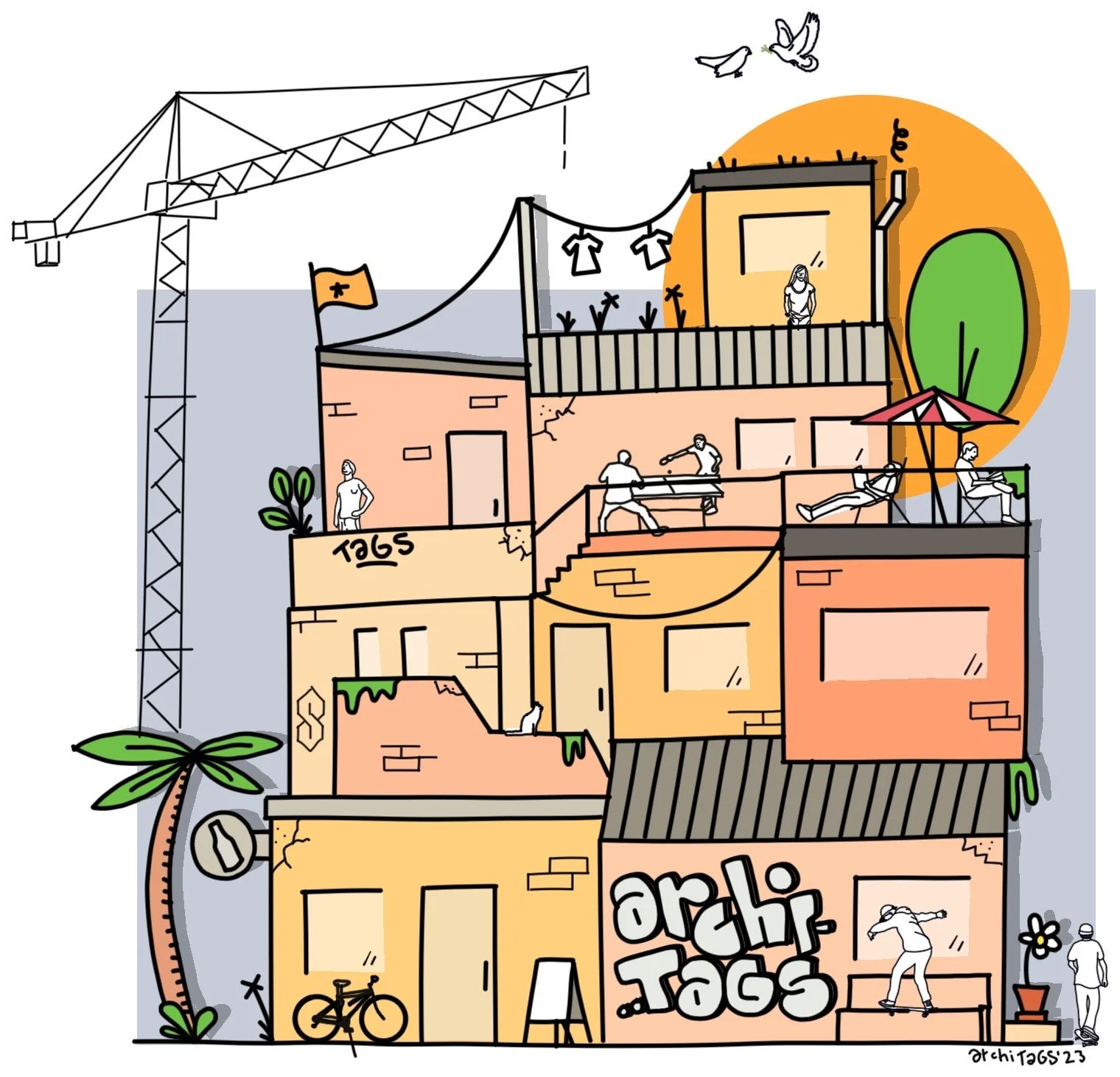
Mission: Planning the urban
Urban development is often much more connected to the 'systemic world' of professionals and often too far removed from the ‘urban world' of residents. Thus resulting in developments based mainly on visions, datasheets, theories and city regulations. Of course, this is important. But, now that we’re densifying existing neighborhoods rather than expanding outside the city its limits, we’re forced to come up with a different approach. To make sure that the ‘living world' is in balance with the 'systemic world'.
The word ‘urban’ should be translated in an additional way. Besides being our concrete build environment, it also include the lived experience by users, (informal) use of spaces, cultural phenomenons and local identities within cities. This is why Mike calls himself an urban urbanist. He believes in preserving the unique identity of places and building upon what has already grown informally and spontaneously, rather than coming up with radical new forms. It gives cities, neighborhoods and places their own unique character.
But how do we plan the urban?
Approach: Curbanism
This is where Curbanism comes in!
Curbanism is a ‘user-centered’ research and design approach that offers tools to include the ‘urban world’. Architags uses it to design the city, its places, new tools and processes from the perspective of its users.
A district, neighborhood or specific place is investigated to map its the qualities and opportunities. This is done while visiting in the area, by observing and capturing insights through visualizations, streetphotography and sometimes though film. The material serves as input for a rich discussion with both professionals and users. This approach enables to build upon what’s already there, because we’re able to make it tangible, acknowledge it and talk about the lived experience by users, (informal) use of spaces, cultural phenomenons and local identities. This can lead to more ownership and cooperation among users. The impact of top-down policies can be weighed up more consciously against local desires.
The approach is inspired on the skateboarder’s perspective on cities.
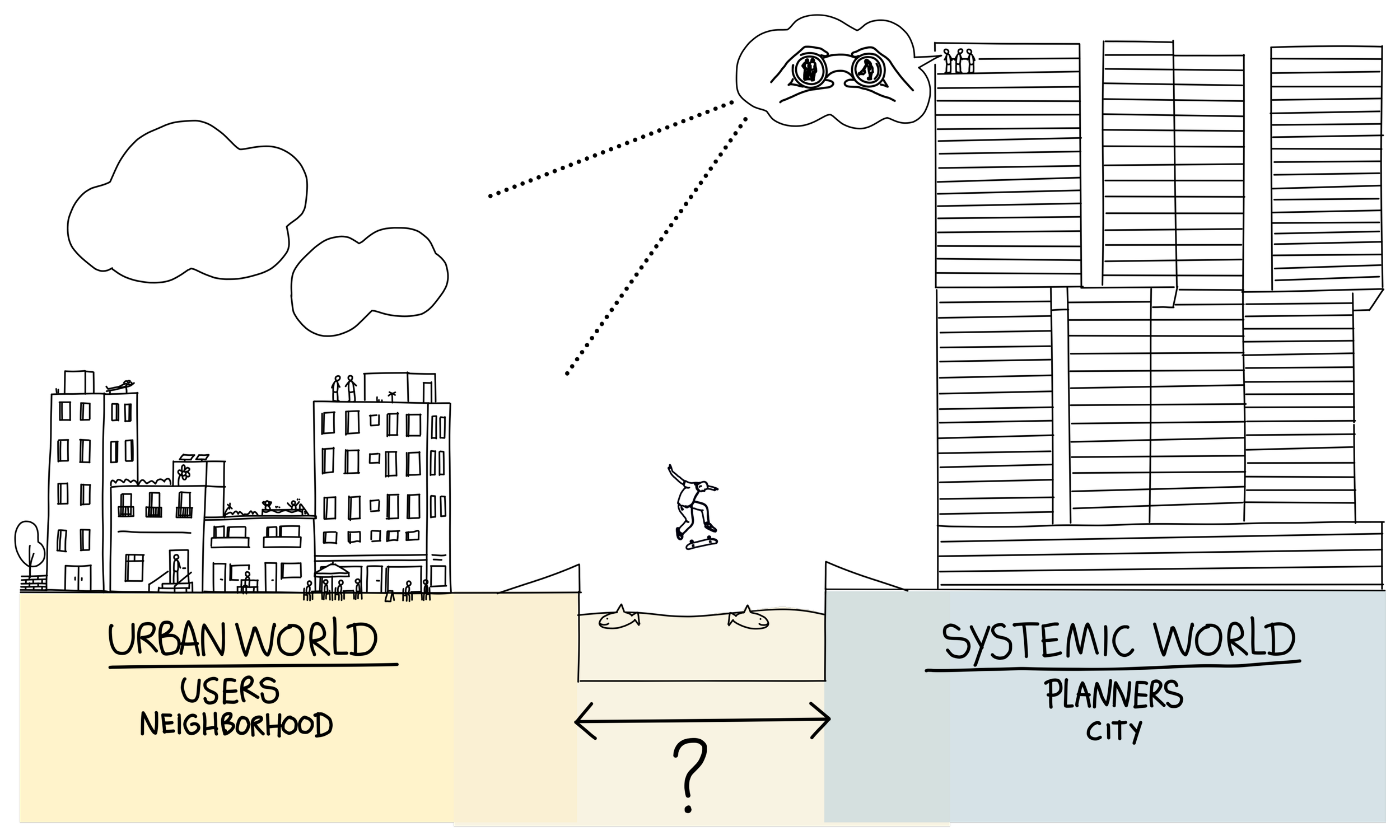
The 'systemic world' of planners is too far removed from the ‘urban world' of users.
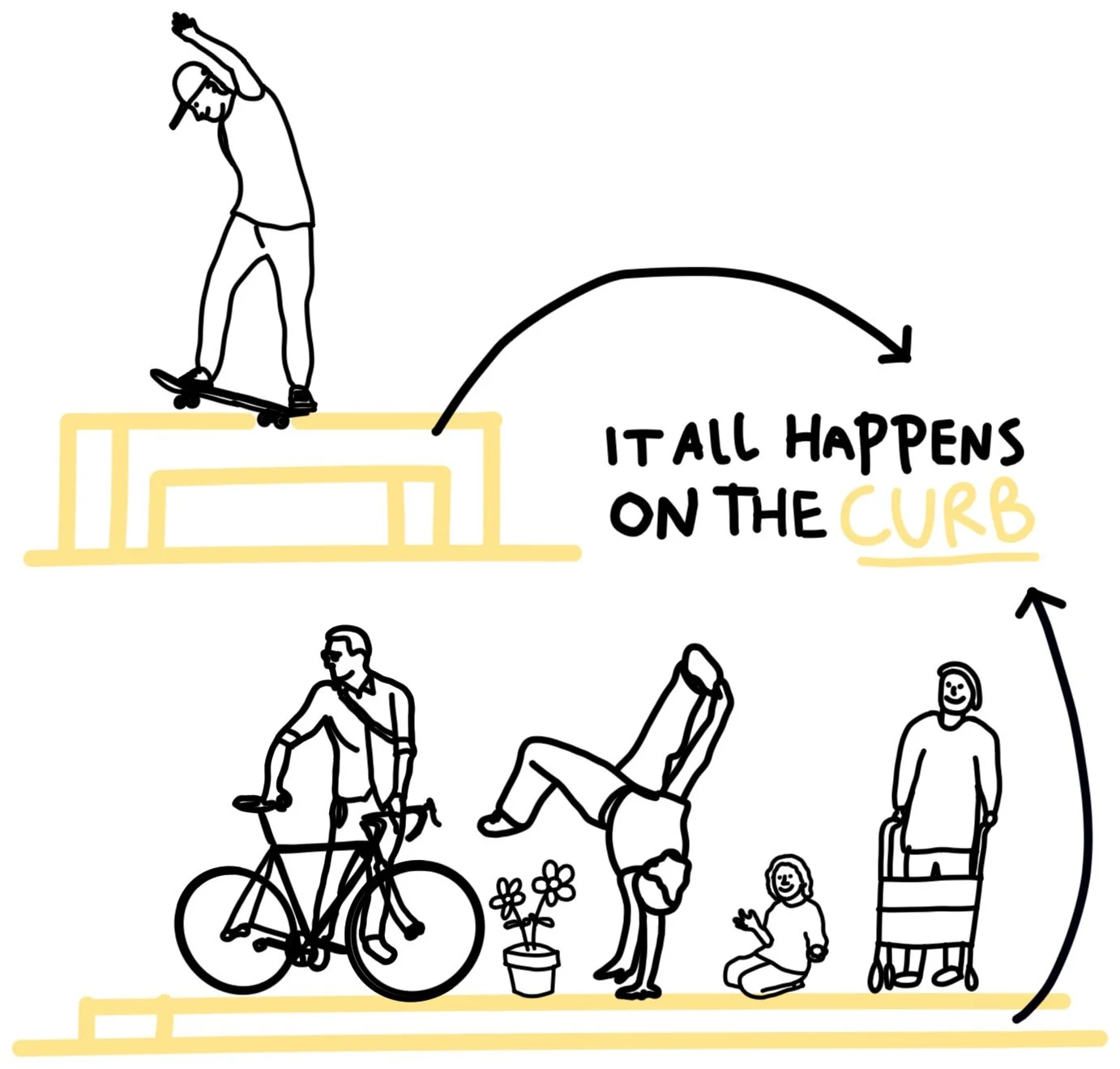

This is where the Curbanism approach comes in.
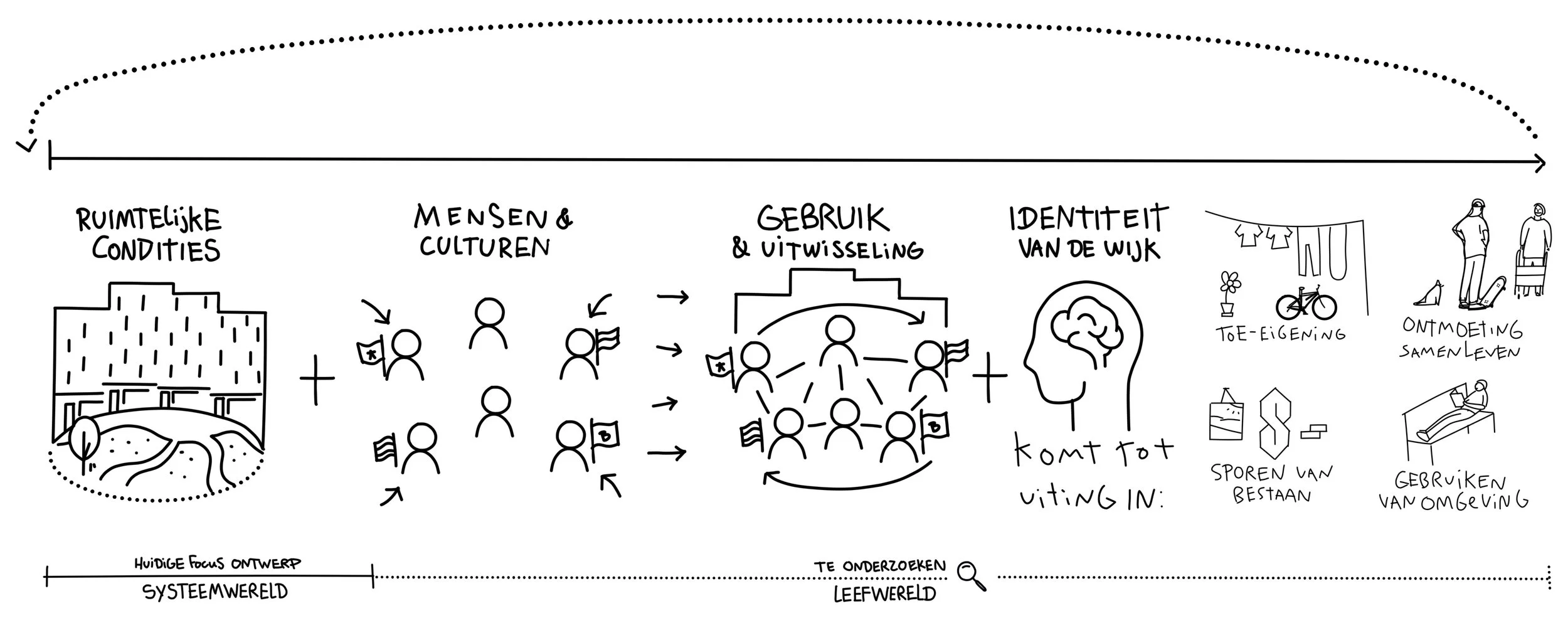
Resulting in designers not focussing only on spatial conditions, but also on lived experience by users, (informal) use of spaces, cultural phenomenons and local identities.